
Quick Answer
There is no exact countdown that guarantees mold will or will not appear. EPA guidance recommends drying wet or damp materials within 24–48 hours to reduce the chance of mold growth.
What the 24–48 Hour Guidance Means
EPA advises acting quickly and drying water-damaged areas and items within roughly 24–48 hours. It is a prevention guideline, not a promise that mold starts at one exact hour.
Moisture Is the Key Condition
A continuing leak, damp drywall backing, wet carpet pad, humid wall cavity or saturated subfloor can extend the period in which materials remain vulnerable.
Hidden Moisture Changes the Picture
EPA notes that mold can occur on hidden surfaces such as the back of drywall and underside of carpet and padding. Visible surface dryness alone is not enough.
What to Do After Discovering Water Damage
Control the source when safe, remove standing water where appropriate, protect unaffected areas and begin drying wet materials promptly. Contaminated water requires different precautions.
Drying and Moisture Monitoring
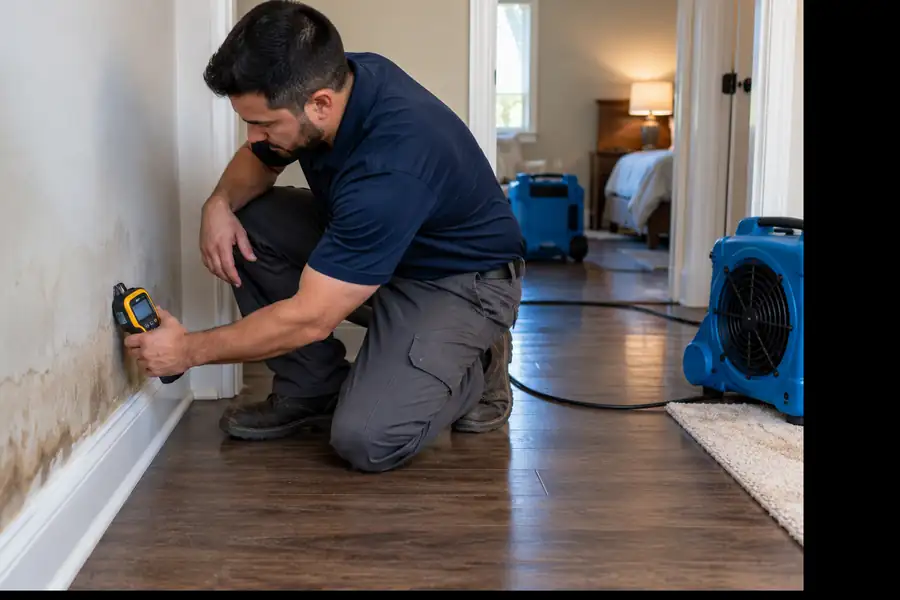
Structural drying uses airflow and dehumidification to remove moisture from materials and air. Monitoring helps determine whether drying targets are being reached.
Service Scope
Oxnard AquaFix's published focus is water damage restoration, extraction, mitigation, structural drying and flood cleanup. This guide explains moisture and mold-prevention considerations; it does not present mold remediation as a separate service.
Related Guides and Services
Continue with water mitigation, structural drying, finding hidden moisture, structural drying time.
Authoritative Guidance
Sources include U.S. EPA moisture guidance and City of Oxnard flood resources.