1. Source Control Stops New Water from Entering
A restoration plan cannot keep up with an uncontrolled source. Depending on the event, source control may involve shutting off a supply line, arranging plumbing repair, addressing an appliance failure, or preventing additional weather-related entry when it can be done safely.
2. Extraction Reduces Continued Absorption
Standing water can continue soaking into flooring, baseboards, drywall, cabinetry, and contents. Removing recoverable water reduces the amount available to migrate and lowers the moisture load that the drying system must manage.
3. Moisture Assessment Defines the Real Affected Area
Water rarely respects room boundaries. It can travel beneath flooring, behind baseboards, and through wall or ceiling assemblies. Checking adjacent materials helps avoid leaving hidden wet areas untreated simply because they are not visibly stained.
4. Protecting Unaffected Areas Reduces Spread
Moving dry contents, controlling traffic through wet areas, and separating affected zones where appropriate can reduce transfer of moisture and debris. The exact steps depend on the water source and property layout.
5. Structural Drying Addresses Retained Moisture
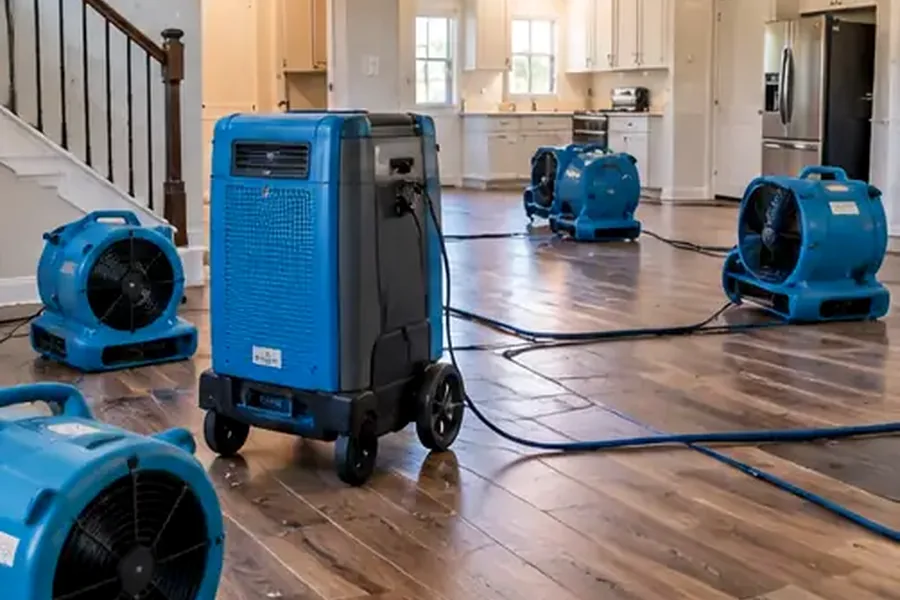
After extraction, moisture can remain inside porous materials. Air movement and dehumidification support evaporation and moisture removal, while monitoring helps determine whether conditions are improving.
6. Material Decisions Can Prevent Avoidable Secondary Problems
Some materials can be dried and retained; others may be too damaged, contaminated, or difficult to dry effectively. The decision should consider material type, water source, duration, physical condition, and accessibility rather than applying the same rule to every loss.
7. Prompt Drying Matters for Mold Prevention
EPA guidance emphasizes moisture control and recommends drying water-damaged materials within roughly 24–48 hours where possible. Prompt action does not guarantee that mold will never occur, but prolonged dampness creates conditions that support growth.
8. Documentation Supports Clearer Recovery Decisions
Photos, notes about the source, affected rooms, and a record of actions taken can help homeowners explain the event to contractors or an insurer. California insurance guidance also advises protecting property from further damage after a loss while reviewing the individual policy.
What Mitigation Cannot Do
Mitigation cannot reverse swelling, staining, delamination, contamination, or other damage that has already occurred. Its purpose is to stabilize conditions and reduce additional loss while the property moves toward drying and restoration.
Water Mitigation for Oxnard Properties
Oxnard properties can experience water damage from plumbing failures, appliances, roof-related leaks, and flood or storm events. The City of Oxnard also maintains floodplain and flood-recovery resources for local residents, making the source and local conditions important parts of the response.
Related Oxnard Water Damage Resources
Continue with water mitigation, water damage restoration and structural drying.
Sources and Guidance Behind This Article
This guide is informed by U.S. EPA moisture and mold guidance, California Department of Insurance residential property claims guidance, and City of Oxnard floodplain and recovery resources. Property conditions and insurance coverage vary, so use the guidance that applies to the specific loss.
Need Water Damage Help in Oxnard?
Oxnard AquaFix provides 24/7 emergency water damage restoration for Oxnard properties, including ZIP codes 93030, 93031, 93032, 93033, 93034, 93035, and 93036.
Contact Us