
1. Check for Immediate Safety Hazards
Do not walk into standing water when electrical equipment, outlets or wiring may be involved. If the structure appears unstable, water is contaminated, or you cannot safely reach the source, stay out of the affected area and get appropriate help. Your safety matters more than saving a floor or cabinet.
2. Stop the Water Source When It Is Safe
If the problem is a supply line, appliance connection or plumbing fixture and you know how to shut it off safely, stopping the source can limit additional damage. A plumber generally repairs the failed plumbing; a restoration company addresses water that has already reached floors, walls, ceilings and other materials.
3. Take Photos Before the Scene Changes
Photograph the source if visible, the affected rooms, water lines, wet materials and damaged belongings. California Department of Insurance guidance recommends protecting property after a loss and keeping records of damage and reasonable temporary measures. If insurance may be involved, contact your carrier and follow the requirements of your policy.
4. Remove Standing Water and Start Addressing Moisture
Visible water is only part of the problem. Water can move under flooring, behind baseboards and into wall cavities. Water extraction removes accessible standing water; water mitigation focuses on limiting additional damage; structural drying addresses moisture retained in building materials.
5. Do Not Assume a Surface Is Dry Because It Looks Dry
Dry-looking drywall, flooring or cabinets can still contain moisture. EPA guidance emphasizes drying water-damaged areas and materials quickly—generally within 24–48 hours where possible—to reduce conditions that support mold growth.
Quick Answer
Professional mold removal becomes more appropriate when growth is extensive, follows major water damage, involves contaminated water, may be hidden inside assemblies, or could affect an HVAC system. EPA guidance says many mold patches under about 10 square feet can often be handled by homeowners, while larger or more complex conditions deserve additional precautions or experienced help.
Start with the Moisture Problem
Mold is a moisture problem before it is a cleaning problem. A plumbing leak, roof intrusion, appliance failure, flooding, condensation, or material that stayed wet can support growth. The water source needs to be identified and corrected, because cleaning visible mold while leaving materials damp can allow the condition to return.
Size Is Only One Part of the Decision
The visible square footage matters, but it is not the only factor. A small patch on a washable hard surface is different from growth inside a wall cavity, on insulation, or across multiple porous materials. EPA also recommends professional help when mold follows sewage or other contaminated water, and extra caution when an HVAC system may be involved.
Porous Materials Can Change the Scope
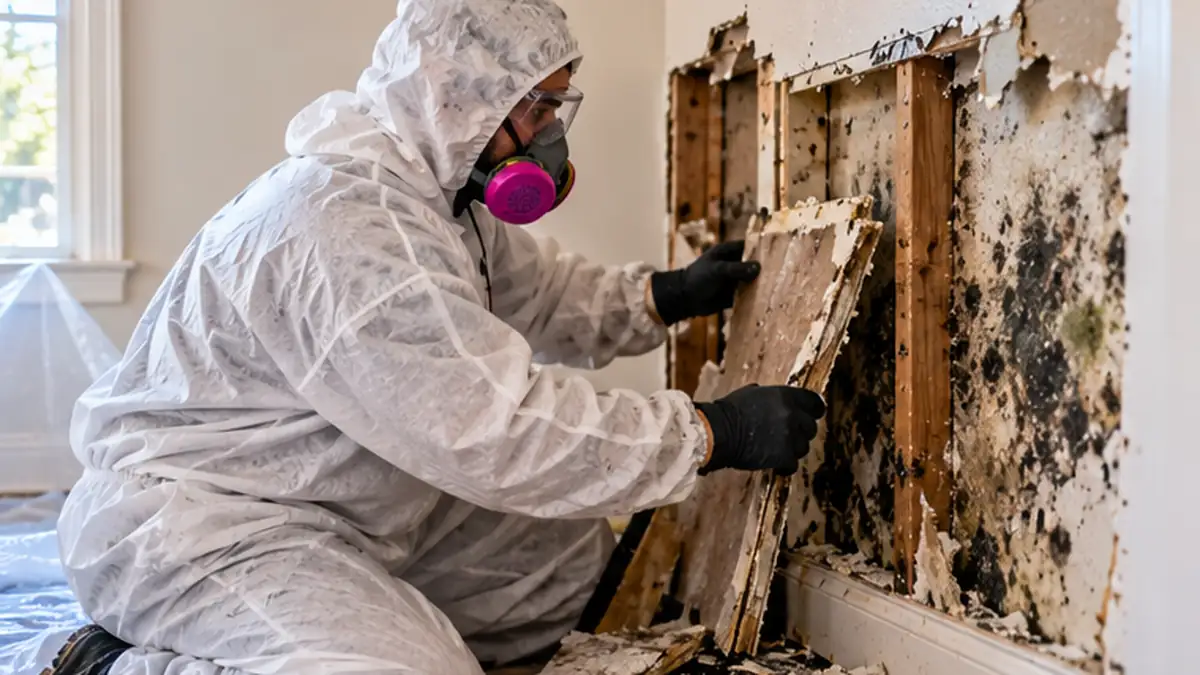
Drywall, ceiling tile, carpet, insulation, and other absorbent materials can be difficult to clean completely when mold has grown into their pores and crevices. Some affected porous materials may need selective removal. Hard, nonporous surfaces may be cleanable with detergent and water when conditions are appropriate, followed by complete drying.
Hidden Mold Can Require Investigation
Musty odor, recurring staining, damp baseboards, swollen drywall, or a history of unresolved water damage can point to moisture behind finished surfaces. Hidden conditions should not be opened casually if doing so could spread dust or spores. The objective is to understand the moisture pathway and affected assembly before unnecessary demolition.
Containment and Exposure Control
Larger remediation projects may need containment so dust and debris from the work area do not spread into unaffected rooms. Appropriate PPE and work practices depend on the scope. Containment is not a substitute for correcting moisture; it is a way to manage the work area while affected materials are cleaned or removed.
What Professional Mold Removal Should Address
- Waiting for a stain to disappear: appearance alone does not confirm that concealed materials are dry.
- Starting repairs too early: paint, flooring or drywall replacement should not hide an unresolved moisture problem.
- Removing everything immediately: demolition should be based on condition, contamination and whether materials can be effectively dried or cleaned.
- Assuming every water loss is an insurance claim: document first, then verify the policy and cause of loss with the insurer.
- Calling only one trade: source repair and building drying are different jobs, even though both may be necessary.
How This Connects to Water Damage Restoration
If mold followed a leak, flood, or other water event, remediation may overlap with extraction, mitigation, and structural drying. The mold work addresses affected growth and materials, while the water-damage work addresses retained moisture and the conditions that allowed growth. See our Mold Removal Oxnard service for the commercial service scope.
Oxnard Considerations
Oxnard's flood-recovery resources include mold-remediation guidance, and the City has advised professional remediation assistance particularly for mold abatement after flood damage. Properties affected by stormwater or extensive water intrusion may also have contamination and reconstruction considerations beyond ordinary surface cleanup.
Frequently Asked Questions
Can I remove a small amount of mold myself? EPA says areas under roughly 10 square feet can often be handled by homeowners in many circumstances, but the moisture source still needs correction. Does bleach solve mold? EPA does not recommend routine biocide use as the core approach; physical removal and moisture control matter. Should moldy drywall be replaced? Porous materials may need removal when growth cannot be cleaned completely.
Next Step
If the mold is widespread, hidden, associated with contaminated water, or tied to unresolved moisture, determine the water source and affected materials before covering the area with new finishes. For property-specific help, visit our Mold Removal Oxnard service page.
Authoritative references: U.S. EPA mold guidance · City of Oxnard resources